kortkritik

When Orpheus Turns His Head

O Future: Enter Afterlife
© PR
© PR
27. may

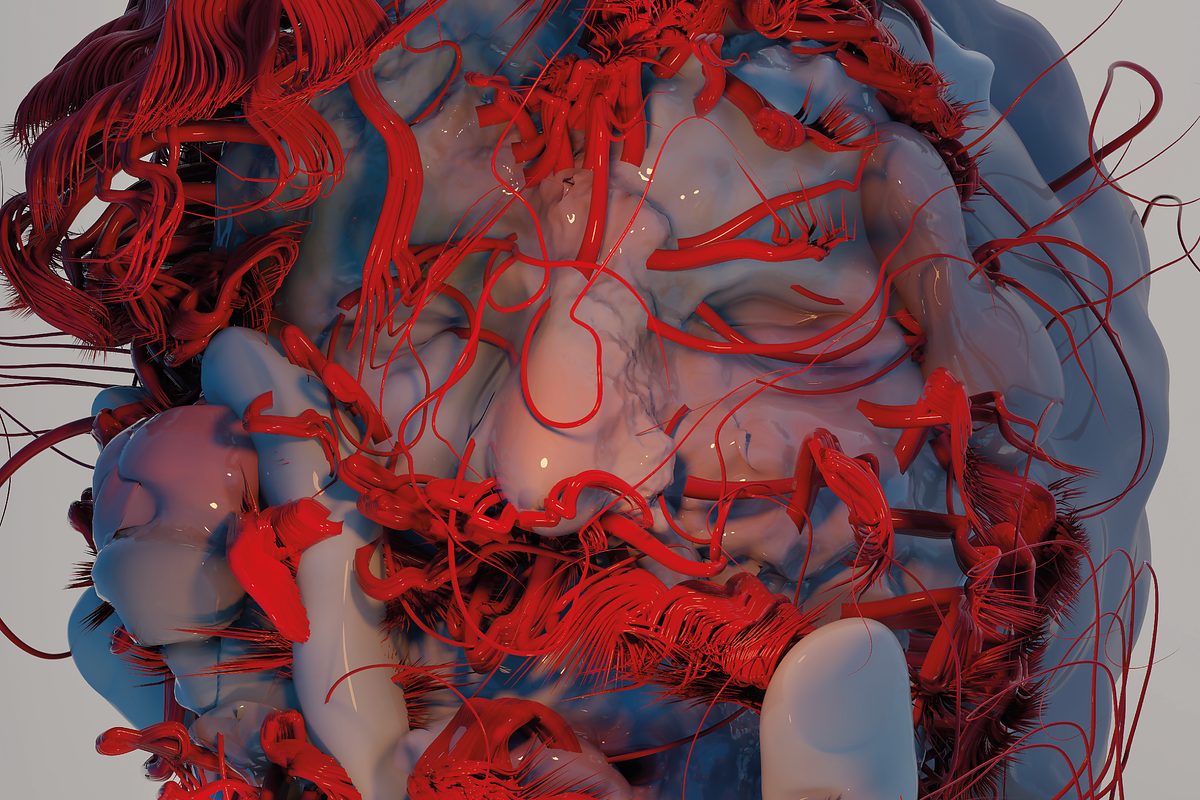
Thorvaldsens Museum is a fitting place to unfold a narrative about the soul’s journey to the underworld. Not only are the halls filled with depictions of Greek mythology, the museum itself is a kind of mausoleum, with Bertel Thorvaldsen’s grave situated at the heart of an inner courtyard. Everything should align perfectly when the multimedia duo O Future stages the descent into Hades through sound and animated video projections. But it doesn’t.

Through eight rooms and five sound works, we move from the banks of the River Styx, through the underworld, and finally to Elysium, where the blissful afterlife awaits. Along the way, we are confronted with judgment, choice, and struggle – existential themes played out on the grandest scale. The electronic soundscape, delivered through headphones, begins with a simmering, oppressive digital lament and accelerates through the rooms to a heavy electronic beat layered with symphonic undertones. We hear jazzy saxophones, looped synths, and white noise, before safely arriving in a spherical, almost sacred, digital choir.

There’s an intriguing theme in the collision between digital voices and the idea of death, but it is drowned out by the many loose ends of the exhibition. Why, for instance, is there no synchronicity between sound and visuals? Why are videos consistently projected onto sculptures that bear no relation to Greek mythology? And why the oddly synthetic color palette that evokes 1990s MTV more than it does the vast drama the story seeks to evoke? I hurriedly close my eyes and try to focus on the beat – but it’s too late. Orpheus has turned his head, and Eurydice is lost. So is this exhibition.

English translation: Andreo Michaelo Mielczarek

Playliste

My name is Per Bloch – would you like to see my playlist?
18. may
© Charlotte Lakits

»For me, music is a bridge between worlds and cultures, and it’s also a path inward – and outward. Toward new insights. Music is what I use when I meet other people, instead of talking about the weather. It’s music that gives me answers and asks the questions. Music is a release valve and the space that can hold all the unmanageable, infinite, and strange emotions in life. A space for everything I can’t seem to fit anywhere else. Music roots the airy and the ethereal. A dissolution of all that is material and tangible.

When I create music myself, I discover new paths and ingredients within me that I didn’t know I had access to. Music is the language through which one can connect with others – with or without formal training – an imaginary language, and yet so concrete that it can be touched and felt. Music is a peephole into others and a gaze that crosses the boundaries that would otherwise divide us.

For me, music is motive, excuse, and emphasis. And a pressure test between reality and fantasy. Music is balance and chaos, tonal poetry, pure lovely gibberish, ultimate perfection – and sometimes the only thing bearable to listen to.«

Per Bloch is a composer and songwriter, as well as the author of novels and children’s books accompanied by musical audiobooks. Last year, he published the children’s book Gakkelaksen og de 10.000 stjerner and the novel Rosa i al slags lys, both including sound pieces. He also released three new songs in three different languages – Greek/Danish, Faroese, and Greenlandic – as a follow-up to the album Kokoro, which consisted of eight love songs in eight different languages. In addition, he released two remixes – one of them based on the novel's soundtrack, created by the Japanese sound artist Sugai Ken.
Playliste

Mit navn er er Pernille Jensen – vil du se min playliste?

16. may
© Thomas Borberg

»Musik er min makker, og det har den været altid. Jeg er vokset op i et hjem uden klaver med en far der var kranfører og en mor der er sosu-assistent. Der var ingen stor pladesamling at gå på jagt i, og det stod ikke skrevet i nogen stjerner, at jeg skulle ende på Politiken. Vi holdt jo Det Fri Aktuelt. Men radioen var altid tændt, og jeg har kunnet trampe min egen sti igennem musikhistorien, uden forældre der slog mig oveni hovedet med deres Beatles-plader. Måske er det derfor, min musiksmag er blevet et hot mess af syrerock, streaming-konger, salsa og satan. Til gengæld jeg spiller ikke selv. Det er min lille gave til alle jer andre.«

Pernille Jensen (f. 1984) er musikanmelder på Politiken. Hun begyndte at skrive for musiktidsskriftet Geiger i 2004, og har siden skrevet for Undertoner og Soundvenue, før hun kom til Politiken i 2011.

Playliste

Mit navn er Telestjernen – vil du se min playliste?

10. may
© Jane Gisselman

»Musik er for mig minder, følelser og oplevelser i – og af – verden. Men den handler lige så meget om at sætte noget i gang og måske – mest af alt – om at holde fast i den frie leg. At lege med andre! Og i den leg kan man proppe hvad som helst: provokationer, fortællinger, der binder os sammen som folk, åndssvage lyde fra jordbærfarvede orgler, rytmebokse af træ og strengeinstrumenter fra en nedlagt centralskole, og meget mere. Når man laver musik, ender det ofte med noget fysisk, man kan stå med i hånden og sige: ‘Det her kom inde fra mit hoved, men nu findes det fandme i virkeligheden – her, på vinyl!’ Og i morgen, du kære kaffekop, går turen i øveren, hvor vi spiller det med mit orkester. For musikken skal ud i verden. På nye eventyr. Sammen med os. Det kan musikken – og jeg – sammen. Det giver en vidunderlig følelse af frihed. Og det er en rar måde at være i verden på. Til alle tider.«

Rasmus Mørup Johansen (f. 1977) – bedre kendt som Telestjernen, men også som protestsangeren Rasmus Johansen fra Fly (tre albums) – er dansksproget sangskriver og musikalsk igangsætter. Han har desuden medvirket i sangskriverkollektiverne Keminova Cowboys og Arctic Assembly (ét album med hver). Ved siden af sit virke som sangskriver og fællesskabsbygger laver han også børnemusik til og med den lokale cirkusklub, Cirkus Højdeskræk. Herudover har han lavet musik med Onkel Reje, børneorkestre og børn fra hele landet. Aktuelt er Telestjernen ude med sit syvende album, Kultfilm fra Karup.

Playliste

My name is Sven Helbig – would you like to see my playlist?

9. may
© PR

»Every moment is nothing but the uttermost end of the past. Music makes this edge wide and beautiful.«

Sven Helbig is a German composer and producer known for combining orchestral and choral music with electronic elements and a strong poetic sensibility. A self-taught musician raised in Eisenhüttenstadt, he released his debut album Pocket Symphonies on Deutsche Grammophon to critical acclaim for its emotional depth and formal precision. Helbig has collaborated with ensembles such as the BBC Singers, Fauré Quartett, and Staatskapelle Dresden, as well as with artists like Rammstein and the Pet Shop Boys. He just released REQUIEM A on Deutsche Grammophon. It is a deeply personal and reflective composition, intertwining classical Latin liturgical texts with new ones written by Helbig himself. The work revolves around themes of loss, memory, and the possibility of renewal – with the »A« in the title symbolizing Anfang (beginning) and the belief in a new start after devastation.

Playliste

My name is Andreo Michaelo Mielczarek – would you like to see my playlist?

25. april
© Kåre Viemose

»Recently, I discovered that when a couple of thousand people clap their thick gloves in minus 30 degrees, it sounds like the softest techno – a freezing space where the cold air turns into a wave of warmth, and we, in a moment of collective devotion, become one with the rhythm, one with the invisible bond that connects us in the warmth of silence. Music is not just sounds, but a vain attempt to capture the infinite, which has always been and always will be.«

Andreo Michaelo Mielczarek has been the editor-in-chief of Seismograf since 2021. He is also a music critic and cultural journalist at Kristeligt Dagblad and Århus Stiftstidende/Avisen Danmark and has over the years written to publications such as Kunsten.nu, Glissando (Poland), Neural (Italy), Raw Vision (UK), Nutida Musik (Sweden), Kunstkritikk (DK/Sweden), Iscene.dk, B.T., and Jazz Special. He is the author (together with Lars Muhl) of the book HVA' SAA! En guidet rutsjebanetur gennem Aarhus – før, nu og i fremtiden (2024) and has also contributed to the anthology on music criticism Man skal høre meget (ed. Thomas Michelsen and Claus Røllum-Larsen, 2024). He is a founder and partner in the Polish-Danish cultural organization Kultur(a), and wherever there is a piano, he will be there, eager to coax a melody from it.