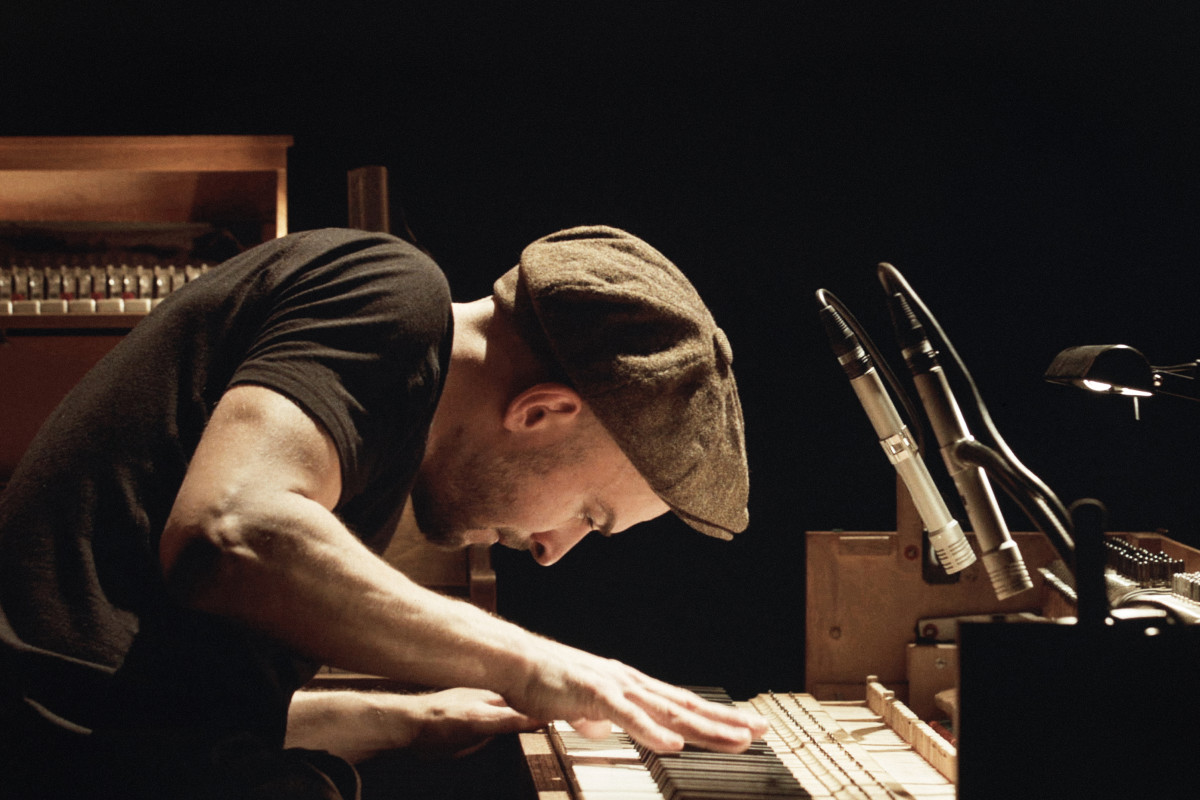
Det er nok godt, at Nils Frahm ikke spillede hele sit nye og over tre timer lange album Music for Animals (som i øvrigt ikke indeholder klaver overhovedet!). Plyssæderne i Musikhuset føltes i forvejen alt for behagelige, så hvor meget langsom musik kan det stressede menneske klare? Under sit fine fredagsambientshow optog den tyske musiker aarhusianerne, mens de lavede dyrelyde (fugle, hunde, dinosaurer), som han spillede hen over. Vi er alle (flok)dyr. Vi genkender og banker med fødderne, når vi hører hjertets rytme. For Frahms musik følger sådanne urgamle rytmer, selvom han omgives af tangentinstrumenter, glasorgel og blinkende maskiner, der blinker til os fra fremtiden.
Analog og digital, robust og flygtig, mekanisk og glat. Frahms koncert var uden de store dramaer. Andet end dem, man selv kunne skabe under egne øjenlåg, mens man enten drev langsomt, ikke hurtigt, ud i universet eller bare forestillede sig, at der under en – når man åbnede øjnene – under plyssædet, pludselig var et dansegulv. Fram selv bevægede sig i en art electric slow dance. Ligesom Erik Saties »møbelmusik« kan Frahms æteriske og nydeligt designede musik for dyr nemlig sagtens opleves meget fysisk. Som en Myrestol med ekstra pude på sædet.
I anledning af Music City Aarhus 2022 sætter Seismograf fokus på musik, lydkunst og komponister i Aarhus.
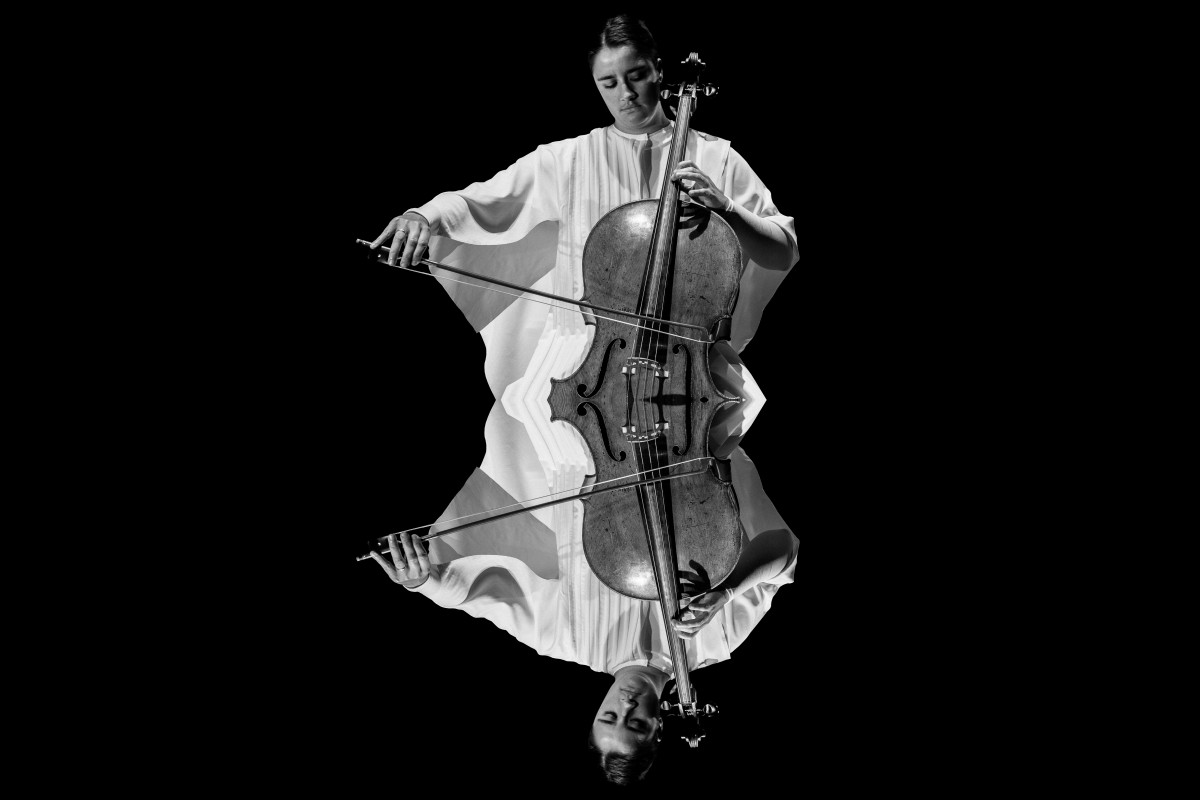
Veroníque Vaka’s ongoing project to pin some of earth’s most momentous geological processes down in notated music is proving beguiling. The latest fruit was premiered on Saturday at Nordatlantens Brygge. Eyland (»Island«) was inspired by the formation of the island of Surtsey, which appeared 33km of Iceland’s coast on 14 November 1963 following a volcanic eruption.
Much of the Canadian-Icelandic composer’s work charts decline; its musical movement tracing harvested data around ecological destruction and decay. Eyland is about creation, and Vaka seemed to revel in the wonder and grandeur of it. The 15-strong Athelas Sinfonietta sounded with the sweep of a symphony orchestra under Bjarni Frímann and Jónas Ásgeir Ásgeirsson’s solo accordion like the emergent island itself, edging up from the spray with magnificent, slow force.
Some of the other five pieces in this concert focusing on music of the North Atlantic could feel like a ritualistic preparation for Vaka’s – a testament to the composers’ focus more than their lack of weight. Around the clear long lines of Eli Tausen a Láva’s Álvan are distinctive North Atlantic sparkle and harmonic depth; Daníel Bjarnason’s Skelja is a miniature sonic romance between harp and percussion and Friðrik Margrétar-Guðmundsson's Fikta a smudged chorale, played with shamanistic intensity by Ásgeirsson. Anna Thorvaldsdottir’s Entropic Arrows focused the mind with its threading of long string tendrils from out of frantic wind and percussion action.
The other premiere was Aya Yoshida’s Song of the Voice – a non-vocal echo of the Faroese song tradition for cello and ensemble in which, at one point, you hear a chain-dance ratcheting round. The work is not without some imagination and effectiveness, but it was made to sound incoherent and unfocused by what surrounded it here.
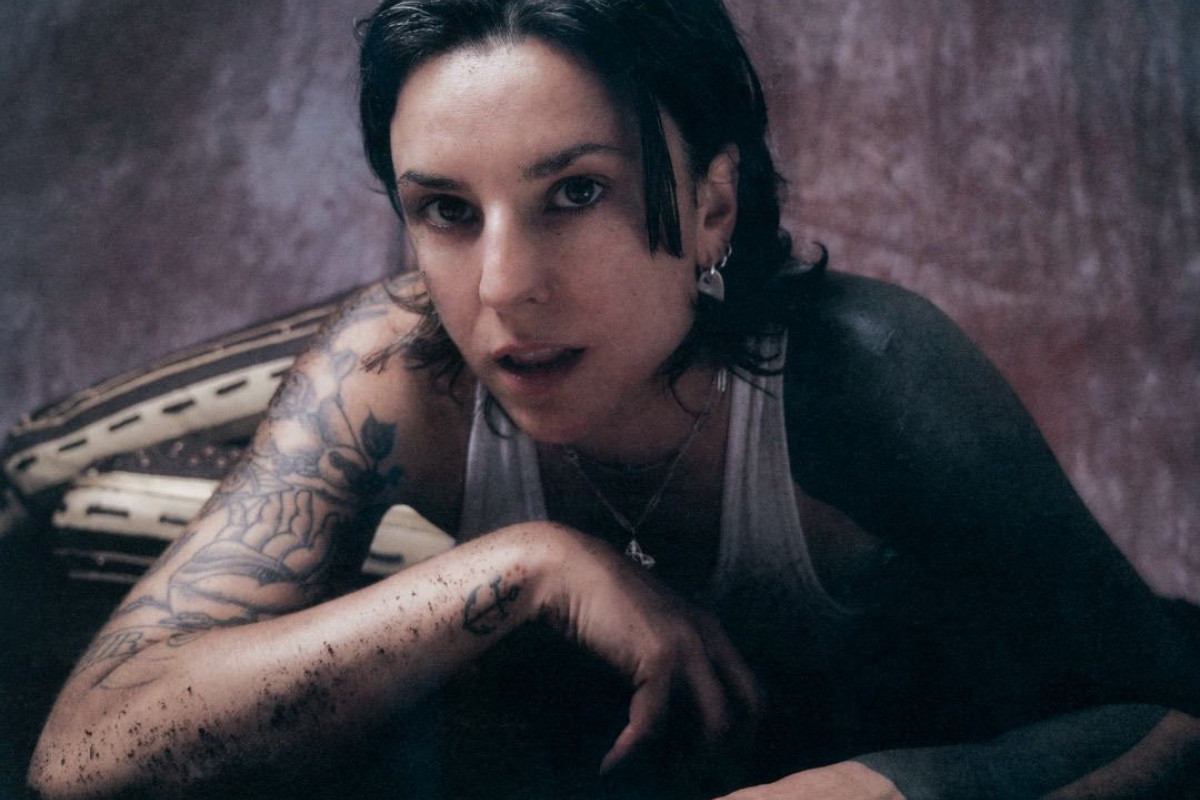
The sound of Eager Buyers is as intense as crackling cellophane – and just as revealing. It’s as if all musical labels have been stripped away, leaving behind a raw, unfiltered sonic world where genres dissolve and everything becomes possible. The Berlin-based Spanish producer JASSS forges her sound in a punkish alloy of electronic music, industrial, EDM, and rock-inspired guitar riffs.
Her third album is a rebellion against conformity and expectation. To label JASSS is nearly impossible – unless the label is cool. In the complex rhythmic compositions, where traces of bitcrush are balanced by melancholic harmonies and subtle hints of medieval-core on the track »Sand Wrists«, we enter a universe that is at once nostalgic and adventurous – and at the same time simmering with the energy of Berlin’s nightlife.
Eager Buyers is magnetic – even for listeners who don’t normally inhabit the electronic realm. The album carries a clear narrative, driven by a dark, almost theatrical energy. JASSS turns toward a world she perceives as »malnourishing« – as she phrases it through song titles like »Hollow« and »The Mob Expects Malnutrition«. Yet the melodrama has a tinge of irony: there’s something disarmingly sarcastic about it all, as if Eager Buyers is ultimately about the disillusioned modern human.
JASSS rattles the cellophane of the musical packaging we usually call genres, reminding us that music, too, is a product to be sold and bought. Eager Buyers is an album that refuses to be wrapped up – and precisely for that reason, it’s worth buying.
English translation: Andreo Michaelo Mielczarek
One Tone, Eight Breaths, and the Sound of Waiting
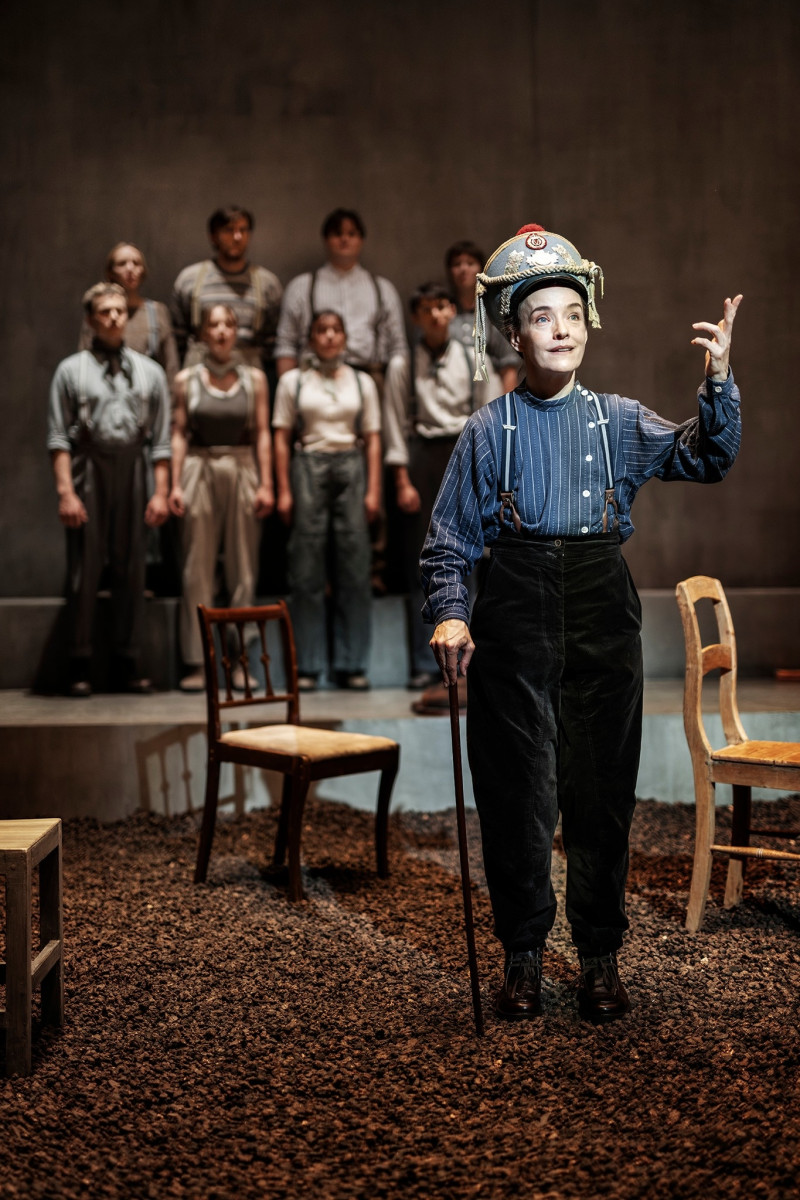
Only one actor appears on stage in The Emperor of Portugalia – surrounded by eight singers. In Elisa Kragerup’s tightly choreographed staging, Louise Alenius’ a cappella composition becomes a physical experience where breath and movement merge into one. The acoustic soundscape interacts eerily quietly with the deafening, mechanical noises that arise when, for instance, beams of light are raised and lowered on stage. It feels as if the relentlessness of existence here briefly finds a sonic expression that captures Selma Lagerlöf’s intentions.
The sparse – or rather ascetic – soundscape, together with the humble peasant costumes, reflects the harsh, monotonous life of a Swedish village before the world turned modern. And the plot? A poor farmer worships his daughter, but when she leaves for Stockholm as a young woman and never returns, his years of yearning drive him, in a Don Quixote-like fashion, to believe himself emperor of the imaginary land of Portugalia, with his daughter naturally imagined as its ruler. The father’s longing borders on madness, while the daughter’s neglect or thoughtlessness ultimately turns against her: in a Godot-like manner, he waits and waits for her – just as she, after his drowning, waits for him, unable to find his body.
The piece is carried by an almost unbroken drone in the choir (produced through collective breathing) – a single sustained tone that, as an artistic device, illustrates how music in theatre can be so minimal that sound itself becomes the message, and the absence of a musical narrative becomes the point. »One tone played beautifully is enough,« Arvo Pärt once said. Except that here, the tone is sung – and in this work, his statement is affirmed in the most radical way: a maximal expression achieved through minimal means, realised with striking precision by Vokalensemblet ÆTLA.
English translation: Andreo Michaelo Mielczarek
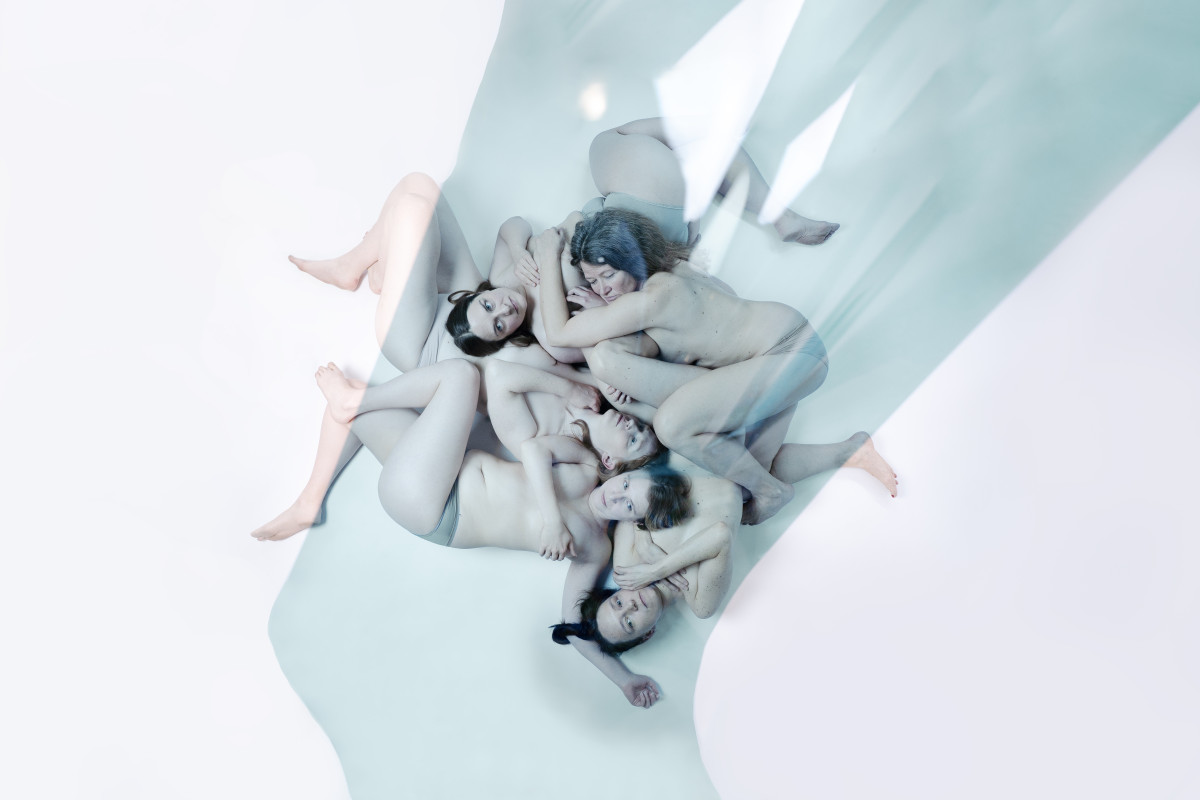

It sounds as if someone has placed a microphone directly inside the nervous system’s electrical impulses. The Nordic electroacoustic vocal ensemble IKI explores the boundaries between body and technology on their fifth, self-produced album BODY, where the five singers’ bodies merge into one large, organic rhythm box.
The tracks change form as the body breathes, dances, awakens, runs, wanders – in the imperative mood. The harmonically unison ripple of »Float« is countered by flickering modem-like sounds in »Regenerate«. Everything is framed by the recurring theme »Circuit«, which ultimately gathers the fragments into a single linguistic statement: »Are you gone when your body is not breathing?«
BODY demands concentration. IKI claims that all sounds on the album are created with the voice – a counterpoint to the electrically manipulated, a kind of reversed version of synthesizer sounds that imitate the human voice. It’s an incomprehensible mystery one keeps listening for: how can the voice produce the accordion-like sound on »Breath«, panned all the way to the left and slowly taking over the entire soundscape? Of course, it can’t do so on its own. The recording itself is an electronic mediation. The technological tools act as a microscope for vocal expression. It’s powerful because it asks about the transitions between human and machine, between life and afterlife. Yet the premise holds a paradox that never fully resolves.
English translation: Andreo Michaelo Mielczarek
K Bech – known from the rock band Shiny Darkly – opened Saturday night’s concert at Alice with a raw, unpolished melancholy. A sense of Copenhagen-style urban gloom was palpable, yet the slightly nervous set never really took off. Despite a promising setup of violin, guitar, and electronic tracks, the sensitive lyrics remained more hints than breakthroughs.
Soap Horse then took the stage and truly ignited the evening with an authentic chicken-picking riff. The country-rooted guitar technique was just one example of the musical abundance running through the band, which has just released its debut EP Tooth Inside a Tooth.
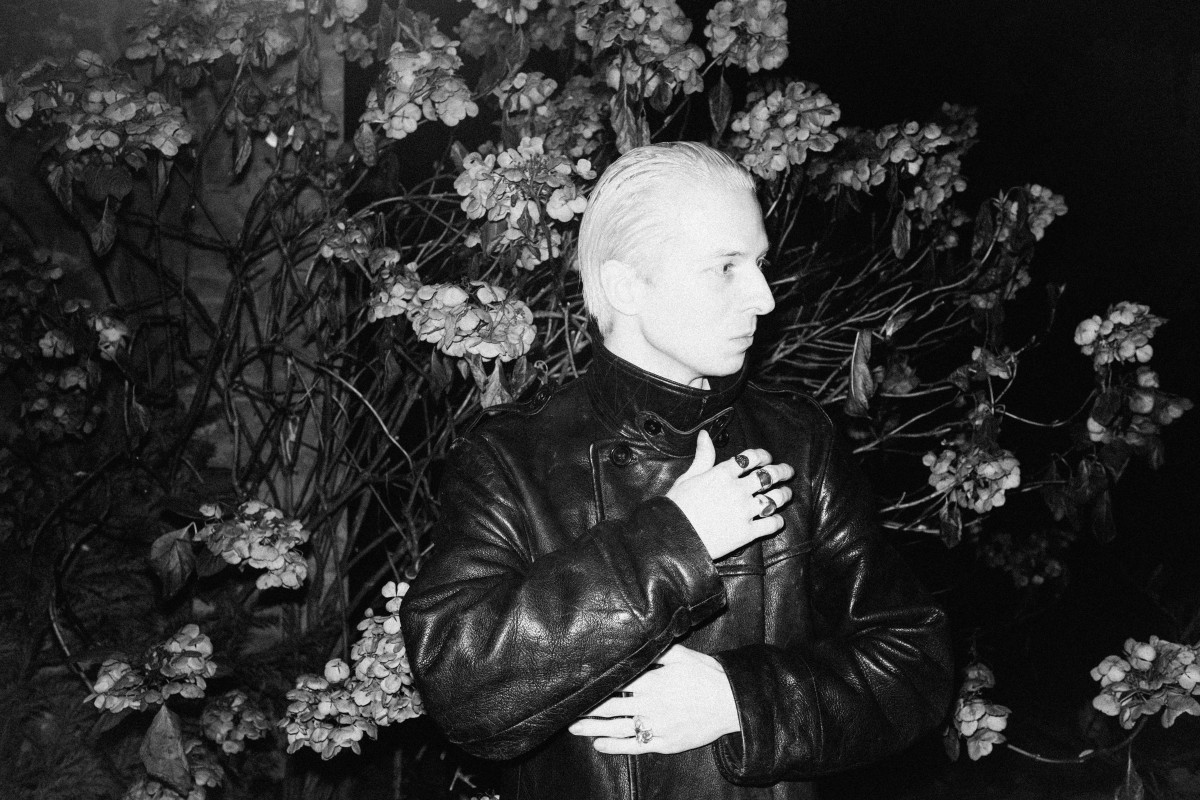
Nothing seemed accidental. From the rust-red gothic tapestry to the carefully chosen instrumentation – violin, saxophone, and pedal steel alongside guitar, bass, and drums – every detail added to a deliberate aesthetic. The sound was dark and alluring, in sharp contrast to frontman Hans Gustav Björklund Moulvad’s shock of white hair and intense stage presence.
The songs were crafted with a refined sense of balance. Simple, repetitive motifs were passed between the instruments, and when massive noise walls and shimmering colors broke through, the already blurred borders of indie rock stretched even further. Moulvad commanded the whole with ease, moving charismatically between the music’s many layers. And yet, I found myself wishing Soap Horse would let go completely. The weightless intermezzos – where the unusual lineup could have truly unfolded – were too often pulled back by a steady drumbeat, returning the music to a safe ground. Soap Horse displayed remarkable control and a firm grasp of both their sonic universe and their audience. Perhaps all that’s left is to prove they dare to loosen their grip.
English translation: Andreo Michaelo Mielczarek