Kristine Tjøgersen Crafts Unreasonably Beautiful Eco-Poetry
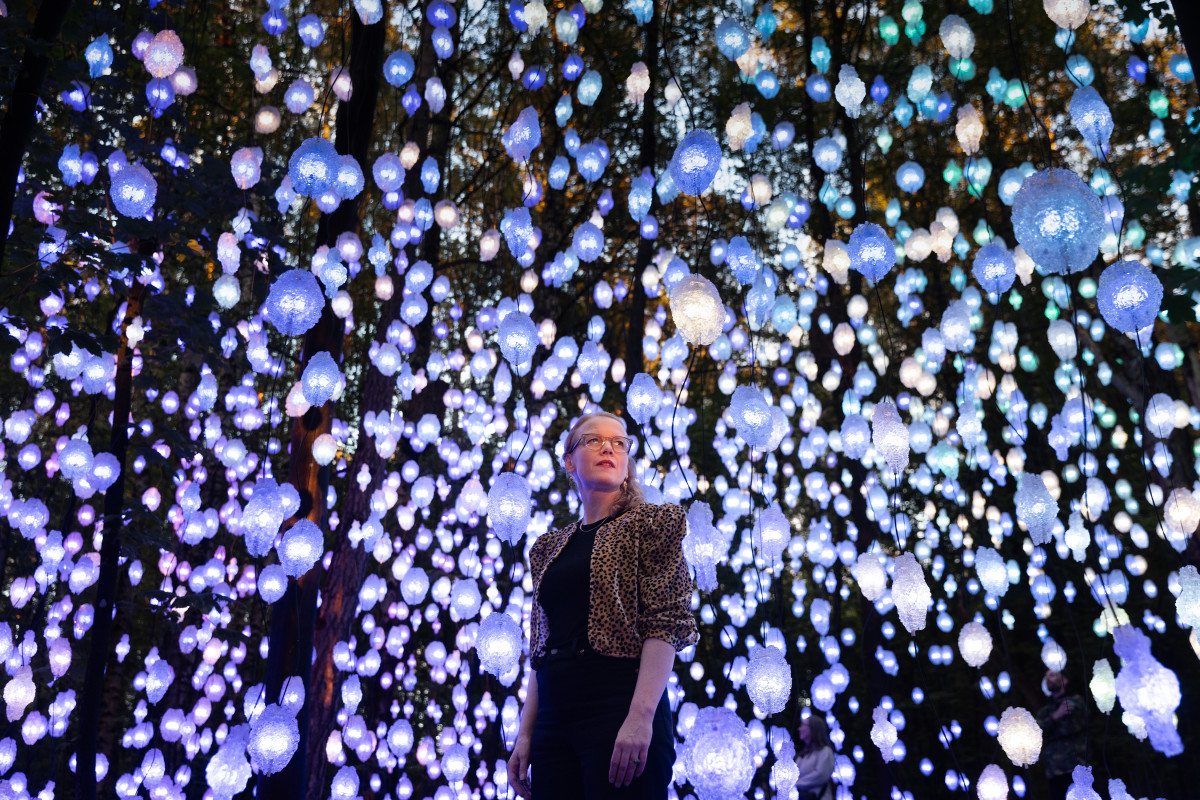

The wildlife of nature is both beautiful and playful – especially in Kristine Tjøgersen’s music. At the center of her new album Night Lives is the wild, unpredictable life of the night beyond the human domain. The album was created as part of the Ernst von Siemens Prize, which Tjøgersen recently received as the first Norwegian composer ever to do so.
The album is a seven-movement sonic version extracted from a staged work premiered at the Ultima Festival in 2023, and it works perfectly well as a standalone, semi-acoustic version performed by the Cikada Ensemble. The music ranges from playful, experimental, rhythmical soundscapes—full of rattling and crackling instruments – to intense, pulsating passages. Tjøgersen possesses a uniquely sensitive understanding of instrumental timbre, allowing her to morph seamlessly between acoustic and electronic worlds, cultural environments, and eras. From a simple, extended flute solo to a dancing computer universe – without blinking an eye.
Forty to fifty years ago, it was called postmodernism when old music appeared in new compositions as reused material. Back then, it made sense because many people had a mental library of historical classical music, a reflective space in which all new music was interpreted. Today, audiences’ minds are different. For example, Kristine Tjøgersen can easily use a completely straightforward Baroque movement as the album’s conclusion – serving as a starting point for music that gradually thins out and dissolves into a stunningly beautiful utopian world of acoustic strings and synthesizer. Without making you feel she is negotiating your sense of past and present. Natural sounds, imitations of nature, harmonies, and entire sequences are simply building blocks in her personal experimental lab. And what a lab it is!
English translation: Andreo Michaelo Mielczarek