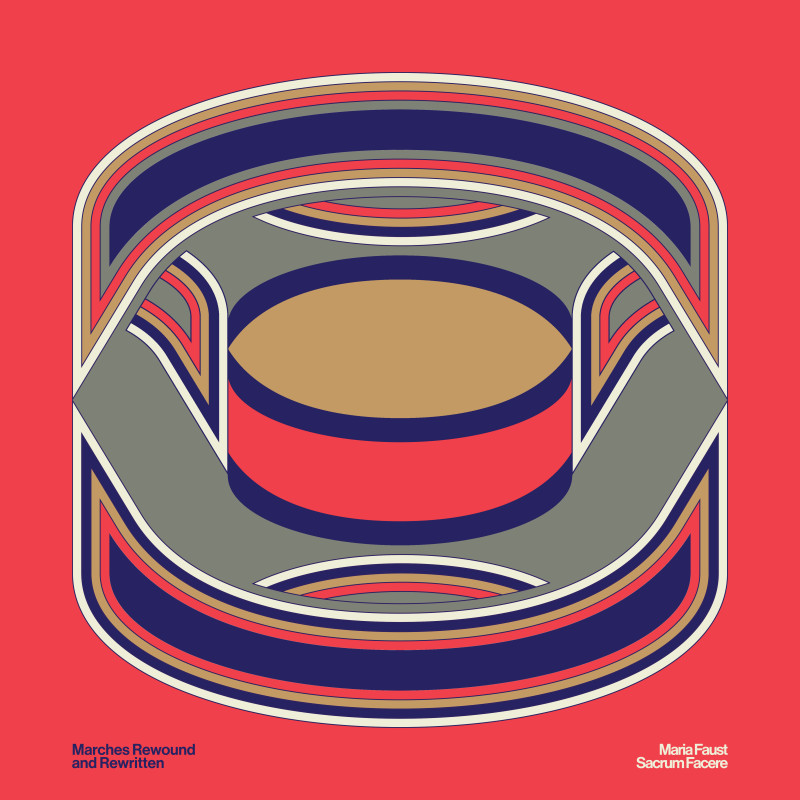
With her latest album, saxofonist and composer Maria Faust has put the political at the center of jazz, in the long tradition of Ornette Coleman, Miles Davis, Charlie Haden, Fred Frith and Tom Cora, just to name a few. What is surprising is her choice of genre, marches, which is not a per se a traditional jazz form. If Charles Mingus, for instance, payed his tribute to New Orleans marching bands, Faust’s choice is definitely antagonistic. The marches she manipulates and destroys from the inside are not of the entertaining sort, unless you’re a general, as they are of the military and nationalistic kind.
Faust’s score would be a perfect fit for plays like Alphonse Allais’s Père Ubu and Bertold Brecht’s The Resistible Ascension of Arturo Ui, in its use of the grotesque as a creative driving force. Faust’s genius however doesn’t lie in turning these marches into farcical circus fanfares, but in creating a truly threatening space within the music, through chaos but also heart-breaking dissonances, which could be heard as a reminiscence of the wailers mourning their dead fallen in the war. Her fairly large ensemble – seven musicians, plus herself – which is composed of six horns and two drums/percussion creates a perfect harmony-disharmony universe, as if Charles Mingus and Sun Ra had worked together.
Marches Rewound and Rewritten is a seminal and important album which shines darkly in these difficult times and reminds us that everything is political – especially music.