

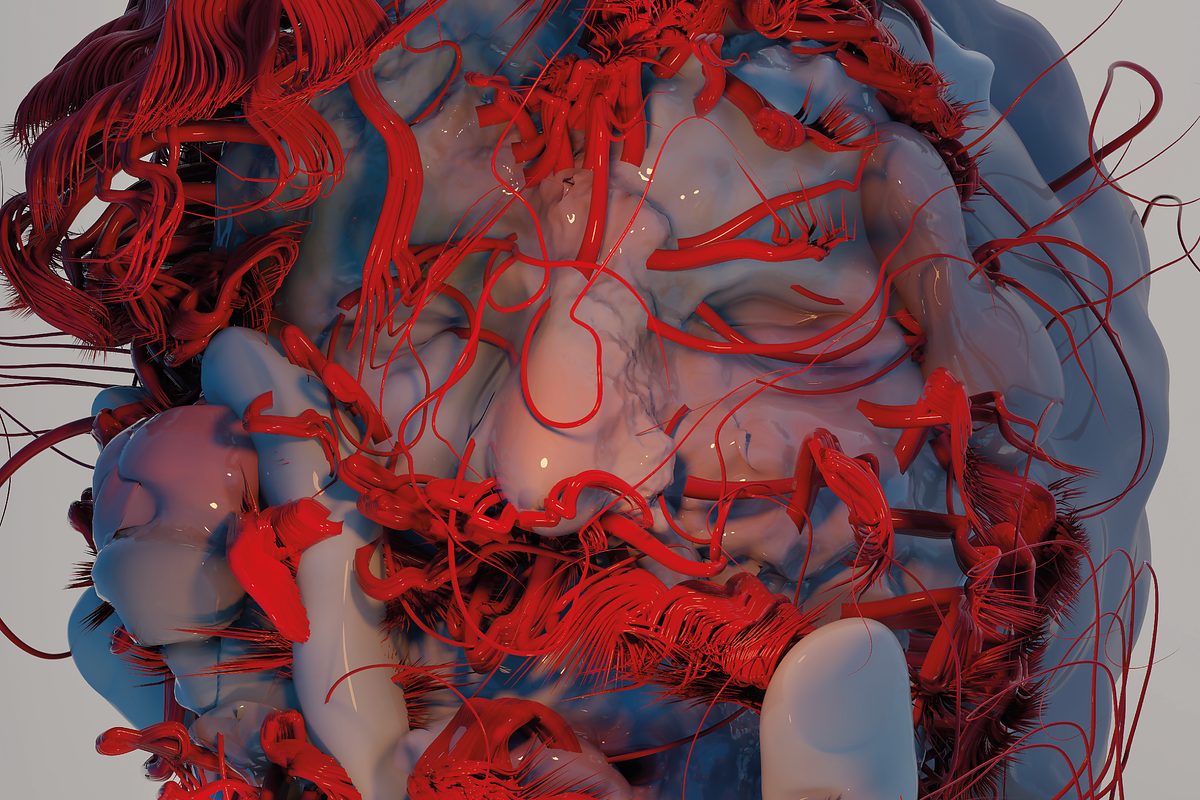

Thorvaldsens Museum is a fitting place to unfold a narrative about the soul’s journey to the underworld. Not only are the halls filled with depictions of Greek mythology, the museum itself is a kind of mausoleum, with Bertel Thorvaldsen’s grave situated at the heart of an inner courtyard. Everything should align perfectly when the multimedia duo O Future stages the descent into Hades through sound and animated video projections. But it doesn’t.
Through eight rooms and five sound works, we move from the banks of the River Styx, through the underworld, and finally to Elysium, where the blissful afterlife awaits. Along the way, we are confronted with judgment, choice, and struggle – existential themes played out on the grandest scale. The electronic soundscape, delivered through headphones, begins with a simmering, oppressive digital lament and accelerates through the rooms to a heavy electronic beat layered with symphonic undertones. We hear jazzy saxophones, looped synths, and white noise, before safely arriving in a spherical, almost sacred, digital choir.
There’s an intriguing theme in the collision between digital voices and the idea of death, but it is drowned out by the many loose ends of the exhibition. Why, for instance, is there no synchronicity between sound and visuals? Why are videos consistently projected onto sculptures that bear no relation to Greek mythology? And why the oddly synthetic color palette that evokes 1990s MTV more than it does the vast drama the story seeks to evoke? I hurriedly close my eyes and try to focus on the beat – but it’s too late. Orpheus has turned his head, and Eurydice is lost. So is this exhibition.
English translation: Andreo Michaelo Mielczarek


Holdet bag DR’s nye musikprogram – der højst usædvanligt faktisk handler om musik – når lige at balancere på kanten af det fortænkte i første afsnit om L.O.C.-baskeren »Frk. Escobar« (2005).
Pligtskyldigt og overfortolkende analyseres temamelodien af en jazzkomponist ved flyglet, studentikost blæser vært Carsten Holm en skoleopgave om lyrikkens »dualitet« op på en containervæg, og fordi hjerneforskeren må være på hurtigkald hos alle kulturredaktioner, får Peter Vuust også lov at fortælle en anekdote om savlende hunde.
L.O.C. griner måbende hver gang, men bærer heldigvis over med redaktionens fikse idéer, tager engageret invitationen til musikalsk næranalyse op, og pludselig sidder rapperen og siger »crescendo« i bedste sendetid lørdag aften. Det er faktisk ret godt gået i sidste ende.
Lad dette være startskuddet til mere lydnær musikformidling på de store medier, også gerne af den mere kritiske slags end her.