
Eivind Buene
9
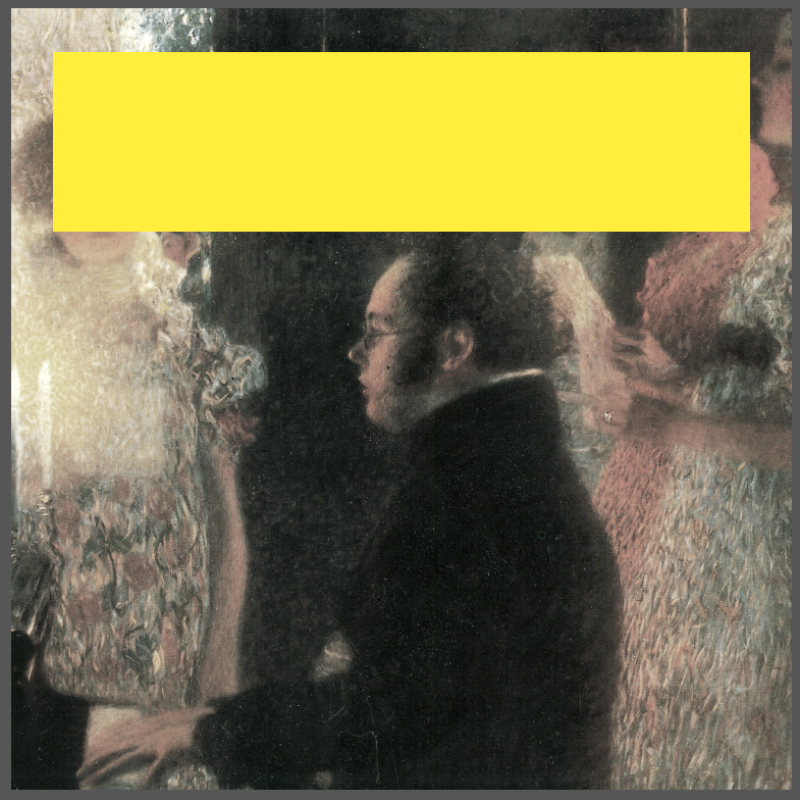
It is always a huge risk to re-interpret classical icons and drag them onto the contemporary scene, especially if you are an award-winning composer and musician of international fame, such as the Norwegian Elvind Buene. Classical music, like all genres, has its small circle of purists and aficionados that are prompt to flag down any attempt to move the statues they adore out of their mausoleums. And this is exactly what Eivind Buene does in his Schubert Lounge album.
The title itself announces an unorthodox approach to the famous German Romantic musical genius: a lounge is not exactly the type of room or architectural installation one would immediately associate with Franz Schubert. But what Buene points to is that Schubert’s music, and more specifically his songs, the famous lieder sung by Kathleen Ferrier and Dietrich Fischer-Dieskau, are about intimacy and that they can be heard today in the half-lit comfort of a lounge, as they were in a salon by candlelight.
There are ten songs on the album, all with their titles in English and without the corresponding German name. For instance, we have »The Sea« and »Beautiful Moon«, which are (very well) known as »Am Meer« and »An Den Mond«. The songs themselves are translated (or adapted) into English, turning the whole project into a singular musical object, which totally deconstructs the traditional prison walls of music history.
Eivind Buene’s voice does not compare with Ferrier’s or Fischer-Dieskau, and it doesn’t even try to. By re-arranging harmonics in modern dissonances and replacing the nuances with a surprising flatness of tone, sometimes switching to delicate higher notes, Buene tells us that classical music is not what we assume it to be: a motionless monument that keeps repeating itself. Turning Schubert into a transnational composer is a radical choice, and a real dangerous one, the risk being to be laughed at, shunned or, even worse, ignored. A Norwegian artist deciding to sing 19th century German lieder translated into English in 2022 is not just an act, it is a radical manifesto. As Buene has written in an article published online, »Music is always now in the sounding moment. Music is, in a sense, a history of unfinished work.«
And this album absolutely proves it.

»Musik er min makker, og det har den været altid. Jeg er vokset op i et hjem uden klaver med en far der var kranfører og en mor der er sosu-assistent. Der var ingen stor pladesamling at gå på jagt i, og det stod ikke skrevet i nogen stjerner, at jeg skulle ende på Politiken. Vi holdt jo Det Fri Aktuelt. Men radioen var altid tændt, og jeg har kunnet trampe min egen sti igennem musikhistorien, uden forældre der slog mig oveni hovedet med deres Beatles-plader. Måske er det derfor, min musiksmag er blevet et hot mess af syrerock, streaming-konger, salsa og satan. Til gengæld jeg spiller ikke selv. Det er min lille gave til alle jer andre.«
Pernille Jensen (f. 1984) er musikanmelder på Politiken. Hun begyndte at skrive for musiktidsskriftet Geiger i 2004, og har siden skrevet for Undertoner og Soundvenue, før hun kom til Politiken i 2011.
»Musik er for mig minder, følelser og oplevelser i – og af – verden. Men den handler lige så meget om at sætte noget i gang og måske – mest af alt – om at holde fast i den frie leg. At lege med andre! Og i den leg kan man proppe hvad som helst: provokationer, fortællinger, der binder os sammen som folk, åndssvage lyde fra jordbærfarvede orgler, rytmebokse af træ og strengeinstrumenter fra en nedlagt centralskole, og meget mere. Når man laver musik, ender det ofte med noget fysisk, man kan stå med i hånden og sige: ‘Det her kom inde fra mit hoved, men nu findes det fandme i virkeligheden – her, på vinyl!’ Og i morgen, du kære kaffekop, går turen i øveren, hvor vi spiller det med mit orkester. For musikken skal ud i verden. På nye eventyr. Sammen med os. Det kan musikken – og jeg – sammen. Det giver en vidunderlig følelse af frihed. Og det er en rar måde at være i verden på. Til alle tider.«
Rasmus Mørup Johansen (f. 1977) – bedre kendt som Telestjernen, men også som protestsangeren Rasmus Johansen fra Fly (tre albums) – er dansksproget sangskriver og musikalsk igangsætter. Han har desuden medvirket i sangskriverkollektiverne Keminova Cowboys og Arctic Assembly (ét album med hver). Ved siden af sit virke som sangskriver og fællesskabsbygger laver han også børnemusik til og med den lokale cirkusklub, Cirkus Højdeskræk. Herudover har han lavet musik med Onkel Reje, børneorkestre og børn fra hele landet. Aktuelt er Telestjernen ude med sit syvende album, Kultfilm fra Karup.
»Every moment is nothing but the uttermost end of the past. Music makes this edge wide and beautiful.«
Sven Helbig is a German composer and producer known for combining orchestral and choral music with electronic elements and a strong poetic sensibility. A self-taught musician raised in Eisenhüttenstadt, he released his debut album Pocket Symphonies on Deutsche Grammophon to critical acclaim for its emotional depth and formal precision. Helbig has collaborated with ensembles such as the BBC Singers, Fauré Quartett, and Staatskapelle Dresden, as well as with artists like Rammstein and the Pet Shop Boys. He just released REQUIEM A on Deutsche Grammophon. It is a deeply personal and reflective composition, intertwining classical Latin liturgical texts with new ones written by Helbig himself. The work revolves around themes of loss, memory, and the possibility of renewal – with the »A« in the title symbolizing Anfang (beginning) and the belief in a new start after devastation.
»Recently, I discovered that when a couple of thousand people clap their thick gloves in minus 30 degrees, it sounds like the softest techno – a freezing space where the cold air turns into a wave of warmth, and we, in a moment of collective devotion, become one with the rhythm, one with the invisible bond that connects us in the warmth of silence. Music is not just sounds, but a vain attempt to capture the infinite, which has always been and always will be.«
Andreo Michaelo Mielczarek has been the editor-in-chief of Seismograf since 2021. He is also a music critic and cultural journalist at Kristeligt Dagblad and Århus Stiftstidende/Avisen Danmark and has over the years written to publications such as Kunsten.nu, Glissando (Poland), Neural (Italy), Raw Vision (UK), Nutida Musik (Sweden), Kunstkritikk (DK/Sweden), Iscene.dk, B.T., and Jazz Special. He is the author (together with Lars Muhl) of the book HVA' SAA! En guidet rutsjebanetur gennem Aarhus – før, nu og i fremtiden (2024) and has also contributed to the anthology on music criticism Man skal høre meget (ed. Thomas Michelsen and Claus Røllum-Larsen, 2024). He is a founder and partner in the Polish-Danish cultural organization Kultur(a), and wherever there is a piano, he will be there, eager to coax a melody from it.

»Music is hope, confusion, and memory talking with each other, leading us toward futures we haven't yet imagined.«
Patrick Becker is co-director of the Wolke Verlag publishing house and co-editor of the contemporary music magazine Positionen.