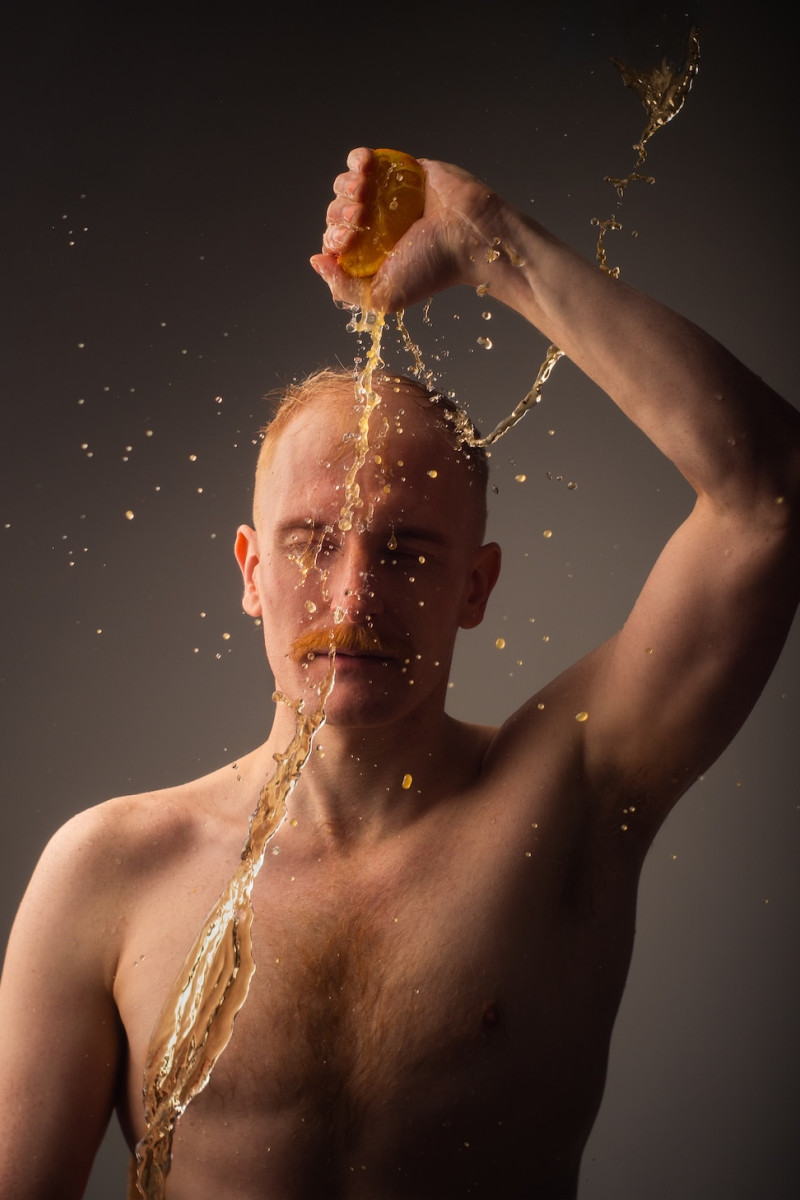
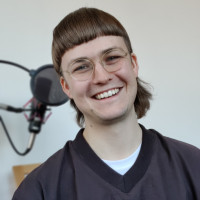
As an abstract micro manifesto Lauri Supponen describes his interest in »music that inhabits a second space and lingers there«, an invitation for us to dwell in the moment and discover music in its quiet emergence.
»Gaz aux étages«, the first composition on Supponen’s breathtaking album, seems to test this idea as it unfolds with whispered bow strokes devoid of pitch. It is as if the piece itself is an entity wondering if it will prove to be music as it tentatively investigates its own constituent components. A subtle opening to an album that answers this question with clarity in its eponymous second work »Dwell« (tracks 2–5), exploring a fascinating microtonal realm. In virtuoso performances of astonishing accuracy, guitarist Petri Kumela and vocalist Tuuli Lindeberg bring Supponen’s demanding four-movement duo to life. The guitar writing in Dwell recalls Norwegian composer Martin Rane Bauck’s Fretted with Golden Fire with its drone-like microtonal strumming – a connection substantiated by the album notes, which reveal both composers know each other and have collaborated with bass clarinetist Madison Greenstone.
The dwelling-space Supponen offers in »Eau & gaz à tous les étages« and »Opus Nen«, return the listener to a more remote sonic space, reminiscent of the album’s opening albeit with tighter compositional sense. Performed with intensity by Madison Greenstone and baritone saxophonist Sikri Lehko, they consolidate the pervasive feeling that Dwell is a uniquely inspired collaboration.
Mathias Reumert Group forstår kunsten at lege med lyd
Mathias Reumert Group er et legesygt og tæt sammenspillet slagtøjsensemble. Det stod allerede klart, da man trådte ind i KoncertKirken – langsiden af salen var massivt fyldt med et imponerende arsenal af slagtøjsinstrumenter, klar til at vække rummet til live. Først på programmet var en skøn fremførelse af György Ligetis »Síppal, Dobbal, Nádihegedüvel« med sopran Anna Caroline Olesen. Et værk båret af humor og evigt omskiftelige men velplacerede lyde: mundharpe, dommerfløjter, marimba, tubular bells og meget andet. Vi var endda så heldige at høre den sidste sats to gange.
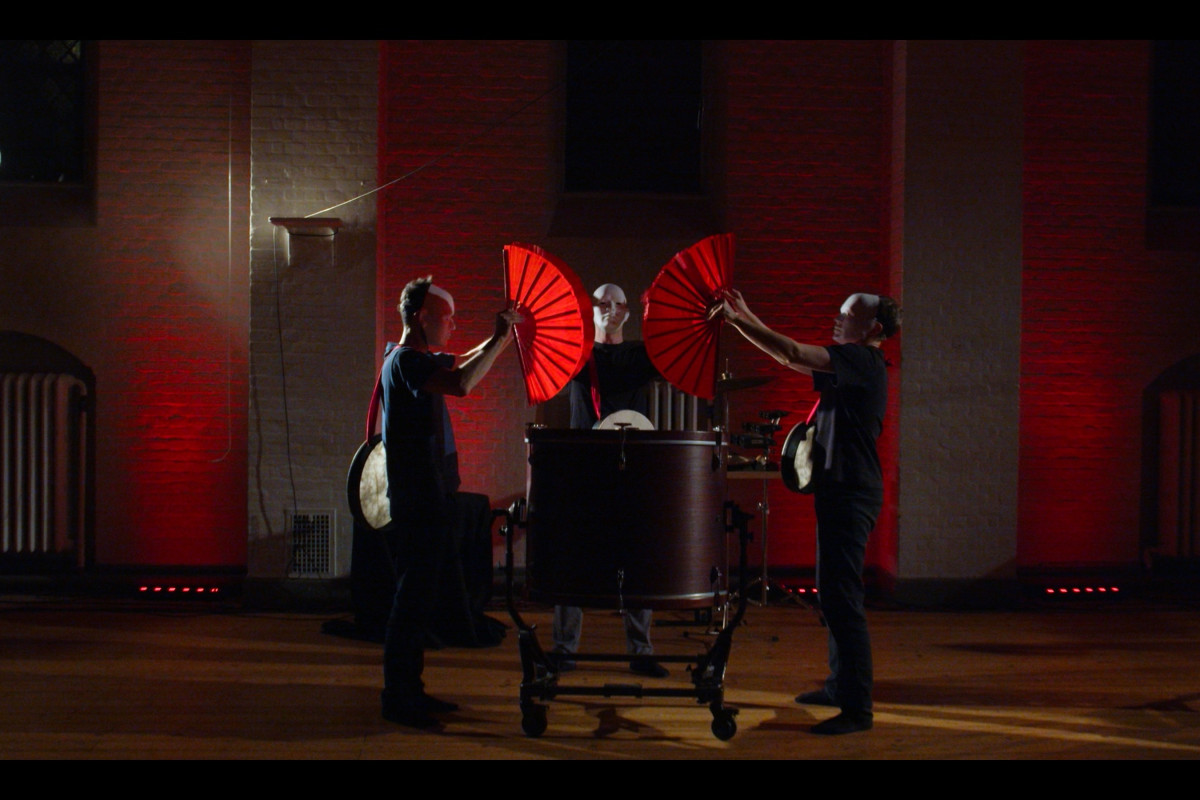
Det tidlige ekstranummer løsnede op i det ellers lidt fortærskede koncertformat; først et værk, så det næste og så fremdeles. I ny-musik ensembler ser man oftere og oftere kuratoriske og konceptuelle rammer for koncerterne. Måske en udvikling, dette nysgerrige ensemble kunne få glæde af? Til sidst var Chiung-Ying Changs »Solar Myth« – et musikteater fæstnet i taiwanesisk kultur, hvor rekvisit og instrument gik ud i et. Tre maskerede væsener spillede sagte på en stortromme, som indledte de et ritual. Men ritualet blev brat forstyrret, da en fjerde percussionist trådte frem og udøvede modstand med marimbaens toner. De tre væsener svarede igen med skarpe, gennemtrængende smæld fra deres knaldrøde vifter – men marimbaen gav ikke efter. Det udviklede sig til et sprængfarligt lydbillede af metallisk slagtøj, der lød lyst, klirrende og dansende. Dramaturgien syntes formet af en dyb forståelse for musikkens væsen. Henrivende. Man forlod KoncertKirken lidt højere, gladere og mere legesyg.
There are twelve tracks on Josefine Opsahl’s album Cytropia, each with the duration of a rock song. Remarkably, there is a straight line from the first to the last – both in timbre, rhythm, melody, atmosphere, and playing. The ears are embraced by a gentle melancholy created by small cello figures in long sequences, with a slow-moving cello melody on top. Some parts in minor, others more open.
She is receiving quite a lot of praise these days for her many projects – an opera and a ballet – alongside her work as a cellist-composer, and it must almost be due to the highly accessible, cohesive, and dreamy sound she consistently delivers. I must admit that I have become somewhat skeptical along the way. Both as a musician and as a composer, I wish she would challenge herself with new approaches and new visions for the stories her music should tell. On Cytropia, we approach a constant state of uniform sound, evoking thoughts of the deliberate inertia of New Age composers.
There are quite beautiful moments along the way. The track »Cyborg« is crystal-clear in its surface. A piece like »Leaverecalls«, in its mechanics, the American minimalism of Philip Glass. But once again, one misses displacements and rhythmic additions that could challenge the static soundscape. The last hundred years of experimentation have expanded the battlefield of cello playing. Opsahl draws on some of these experiences to create her own small mechanical accompaniments for herself. Yet, the setup with a sequencer and a cello seems limiting in allowing Opsahl to explore timbres and ideas where the gravity of melancholy can truly be felt.
Der er tolv skæringer på Josefine Opsahls album Cytropia, hver af en rocksangs varighed. Bemærkelsesværdigt nok er der en lige linje fra den første til den sidste – både klangligt, rytmisk, melodisk, i stemningen og i spillet. Ørene omfavnes af en let melankoli skabt af små cellofigurer i lange sekvenser med en langsommelig cellomelodi ovenpå. En del i mol, andet mere åbent.
Hun får ret meget ros for tiden for sine mange projekter – en opera og en ballet – ved siden af produktionen som cellokomponist, og det må næsten være på grund af den meget tilgængelige, helstøbte, drømmende sound, hun er garant for. Jeg må indrømme, at jeg er blevet lidt skeptisk hen ad vejen. Både for hende som musiker og som komponist vil jeg ønske, at hun udfordrede sig selv med nye tilgange og nye visioner for, hvilke historier hendes musik skal fortælle. På Cytropia nærmer vi os en konstant tilstand af ensartet lyd, der får tankerne hen på new age-komponisternes bevidste inerti.
Der er ret smukke tilstande undervejs. Nummeret »Cyborg« er glasklart i sin overflade. Et nummer som »Leave« minder i sin mekanik om amerikansk minimalisme, som Philip Glass kan skrive den. Men igen savner man forskydninger og rytmiske tilføjelser, der kan udfordre det statiske lydbillede. De sidste 100 års eksperimenter har udvidet kampzonen for cellospillet. Opsahl bruger nogle af de erfaringer til at skabe sine egne små mekaniske akkompagnementer til sig selv. Alligevel virker setup’et med en sequencer og en cello begrænsende for, at Opsahl kan nærme sig klange og ideer, hvor melankoliens alvor kan mærkes.
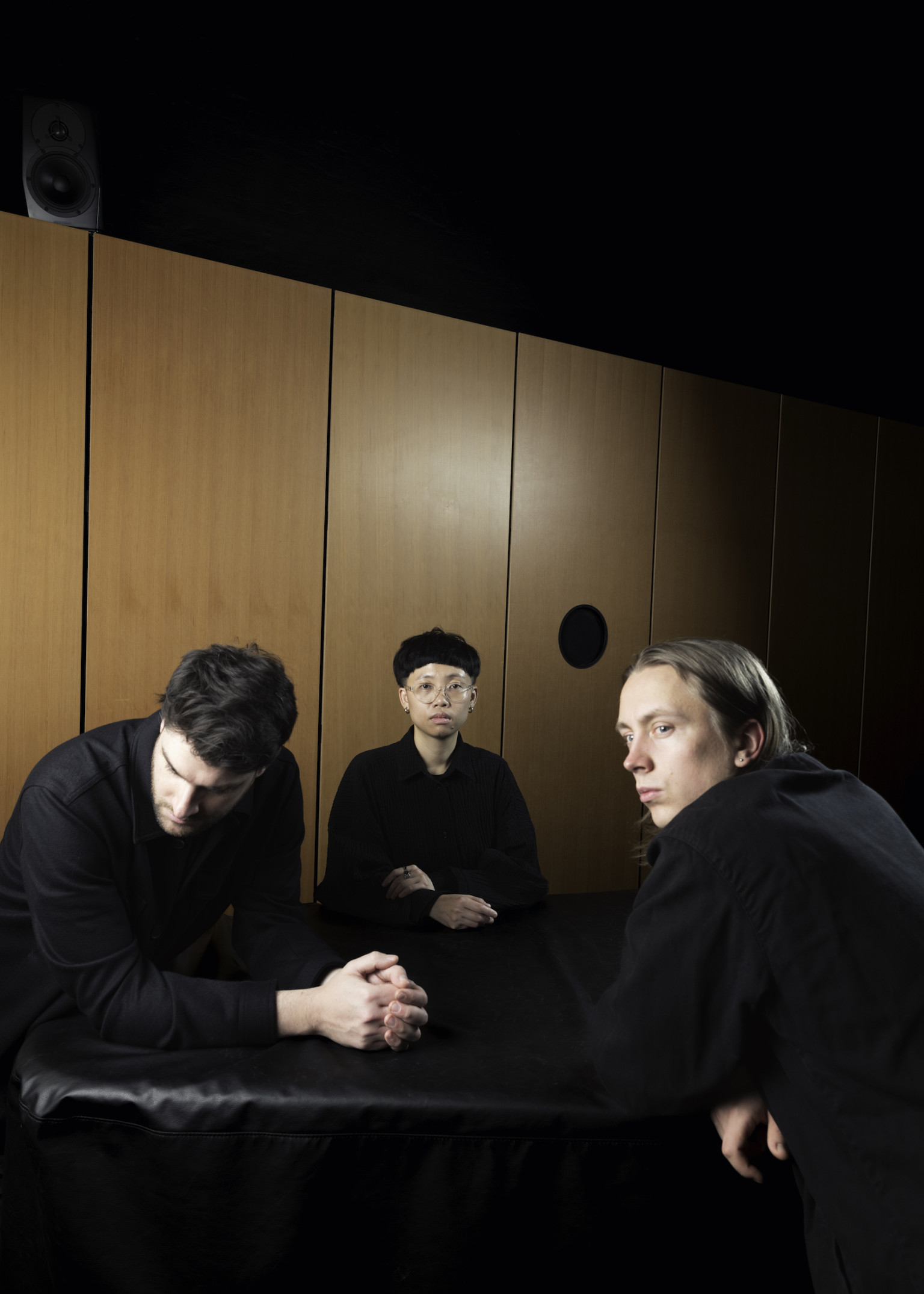
We are NEKO3 – would you like to see our playlist?
NEKO3 has performed at Festival Internacional de la Imagen, SONICA Glasgow, cresc... Biennale, Time Of Music, Rondò, MINU festival, Copenhagen Light Festival, Unerhörte Musik and Spor Festival. They have been featured as soloists with the Danish National Symphony Orchestra and the Aarhus Sinfonietta, and given workshops and presentations at ie. Standford University, the Royal Danish Academy of Music, Hochschule für Musik und Theater Hamburg, University of California San Diego and Kungliga Musikhögskolan (SE). The ensemble has recorded multiple EP’s and released their first full length album Angel Death Traps in collaboration with Alexander Schubert in 2024.