
kortkritik

Arkiv over fragmenter

Alice Archives: Astrid Sonne + Francesca Burattelli
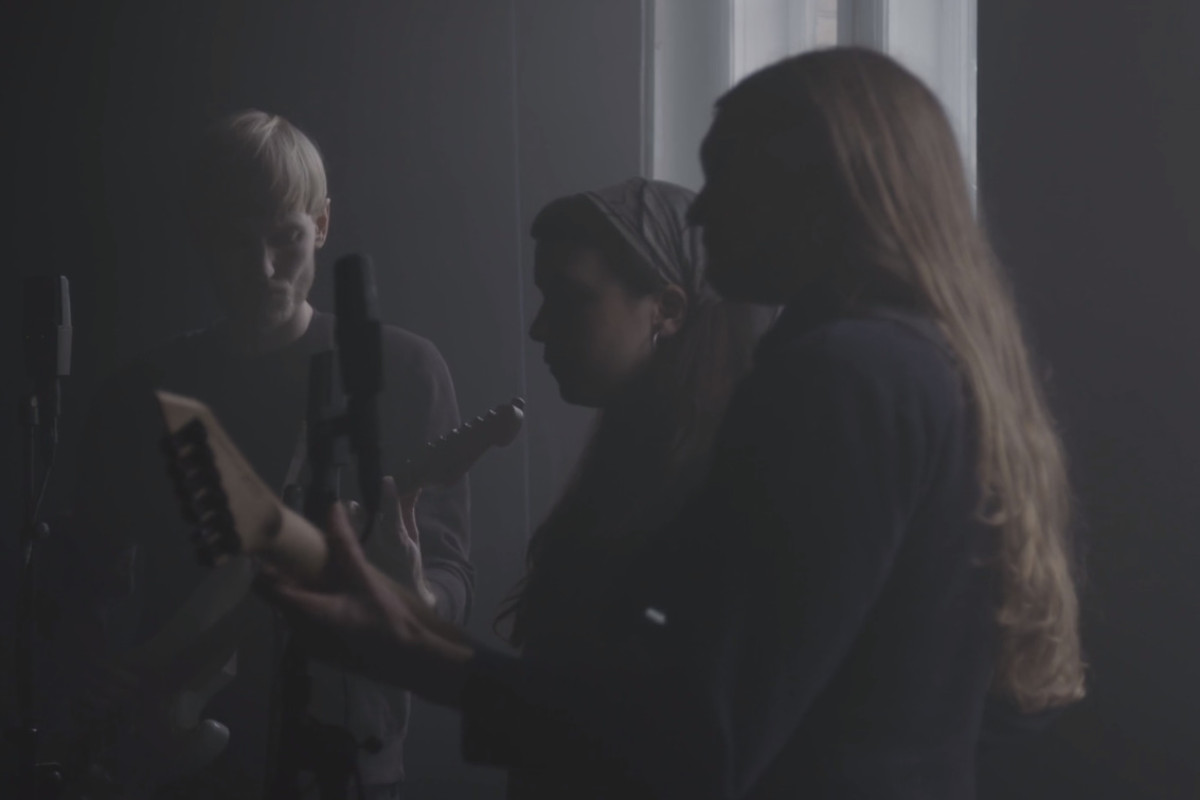
Astrid Sonne omgivet af Tobias Kropp og Marie Louise Buch. © Alice

Astrid Sonne, Marie Louise Buch og Tobias Kropp indleder deres minikoncert a cappella. Trioen er indrammet af det blege lys fra vinduerne i baggrunden, og den flotte billedside, med sine nedtonede farver og lidt uskarpe kvalitet, skaber en nærmest sakral stemning.

De tre musikere både står og sidder i løbet af koncerten, og på samme måde, som de bevæger sig mellem instrumenter – mikrofoner, elektriske guitarer, violin, sampler – så bevæger de sig også gennem forskellige stilarter. Førnævnte smukke korsang afløses af simpelt, men effektivt dobbeltguitarspil, tempofyldt elektronisk og violinpassage.

Mens jeg finder alle de individuelle dele interessante og endda smukke, så frustreres jeg over manglen på en stærkere rød tråd igennem hele koncerten.

Den røde tråd viser sig også at blive min anke i Francesca Burattellis koncertvideo. Denne indledes af sangerinden akkompagneret på akustisk guitar. Dette første nummer er som folkesangens varme muld, og lyssætningen matcher med røde toner.

Da sangen er færdig, skifter alt dog karakter via et meget åbenlyst klip i både video og lyd. Den fjerde mur brydes, og fortællingen gør holdt og genoptages. Nu er Burattelli pludselig alene på scenen, og både musik og lys er mekanisk og koldt, endda til tider sørgende. Der er en interessant historie i overgangen fra den indbydende skønsang til den efterfølgende næsten forvirrende dissonans, som var Burattelli en sirene fra den græske mytologi.

Det abrupte skift er på sin vis et effektivt virkemiddel, men jeg ville ønske, at det kunne være blevet inkorporeret på en måde, der ville fremme indlevelsen i stedet for at hindre den.

Playliste

My name is Bastian Zimmermann – would you like to see my playlist?
24. april
© PR

»A lot is projected onto music and making music – I'm careful, singing doesn't make you more intelligent and certainly doesn't make you a better person. It's like in sexuality. A lot of things go very consciously wrong for some people. Music like sex are means of communication, people come into contact and negotiate with each other and their instruments/tools and meet themselves in it. This is also the case when I listen to music – from every conceivable genre and context, even if I always notice that as a teenager I used to play a lot of jazz guitar.«

Bastian Zimmermann lives in Munich and works freelance in the areas of music and performance. As a dramaturge, he works with artists such as the soloist ensemble Kaleidoskop, Yael Ronen and Neo Hülcker. He is editor of the German speaking magazine Positionen – Texts on Current Music and curates projects such as »Music for Hotel Bars« and the festival Music Installations Nuremberg festival. His focus is on social aspects of making music, experimental music concepts and the questioning of bourgeois structures in contemporary music. In Spring 2025 he will take over the Wolke Verlag publishing house for books on music with Patrick Becker.
Playliste

My name is Sanne Krogh Groth – would you like to see my playlist?

24. april
© PR

»Music to me is… my work. I've landed in the best job in the world, where a core task is to discover new music, to learn its internal logic and aesthetics, who created it, and why. I'm a music researcher and have just returned from the island of Java in Indonesia with my research partner and husband Nils, where we've been visiting experimental musicians in Yogyakarta – artists we've now followed for seven years.

One recurring theme is the trance/horse dance jathilan (or jaranan), which several of the artists have introduced us to. Jathilan is on one hand an old Javanese ritual, and on the other hand a contemporary (village) culture in full development. There is no single historically 'correct' jathilan. It's a practice that follows an old spiritual ritual, but is also open to current Indonesian influences.

The playlist consists of three tracks by Senyawa, Gabber Modus Operandi, and Raja Kirik, all of whom have incorporated the ritual into their music. The fourth track was supposed to be a 'traditional' jathilan, but as far as I know, no such recording exists on Spotify. Instead, I found a related jaranan piece that includes a dangdut song – an ultra-popular genre that is often performed as part of a jathilan event. The final track is one of the most popular dangdut songs at the moment.«

Sanne Krogh Groth is Associate Professor of Musicology at Lund University, Sweden, where she conducts research on electronic music and sound art, currently with a focus on Indonesia. Sanne was editor-in-chief of Seismograf from 2011–2019. In 2015, she established Seismograf Peer, which she is still the managing editor of.

Playliste

My name is Liza Sirenko – would you like to see my playlist?

24. april
© Henry Detweiler

»For me, music is work and a way to escape it. Music is the fanciest way of communication and therefore the most delicious food for analysis. It is what prolongs your feeling for longer than you can physically hold. Music is something after which you say: 'I’m glad you didn’t use words'. After all, it’s something that makes your commute or chores shorter, and this time-controlling function is the very first and foremost mystery I love about it.«

Liza Sirenko is a music theorist and music critic from Kharkiv, Ukraine. She is a co-founder and board member of the Ukrainian media about classical music The Claquers. She is a former Fulbright Visiting Scholar at the Graduate Center, CUNY (New York, USA), and a graduate of National Music Academy of Ukraine (Kyiv, Ukraine). Her current interests include processes in the classical music industry, contemporary opera in Ukraine, and a role of postcolonial moves in these. Liza is a former PR Director of the Kyiv Symphony Orchestra, currently working as a Program Officer at the Goethe-Institut Ukraine.

Playliste

Mit navn er Xavier Bonfill – vil du se min playliste?

17. april
© PR

»Musik for mig er det, der gør verden større. Det, der rummer utallige realiteter, skønheder og modsigelser. Noget, der foregår over tid, men som er tidløst.«

Xavier Bonfill er catalansk komponist, performer og tværdisciplinær kunstner bosat i København. Hans værker spænder fra traditionelle instrumenter til elektronik, video og digitale formater. Han arbejder i spændingsfeltet mellem dualiteter: det poetiske og det overfladiske, det ekstravagante og det intime, det excentriske og det naive. Hans musik er følelsesmæssigt intens, dybt resonant og fremadskuende. Han er stifter af ensemblet haknam og pladeselskabet Don’t Look Back Records.

Playliste

Vi hedder Nausia – vil du se vores playliste?

15. april
© Astrid Lemmike

»Musik for os er det umiddelbare. Der er noget dejligt over at dele det umiddelbare sammen med andre. Musik for os er universelt og uforklarlig. Musik er 'the healing force of the universe'. og den er good times. Den er klam storkapitalisme og antikapitalistisk hjemmegroet DIY. Den er fællesskab, fest og alle følelser. Musik for os er …«

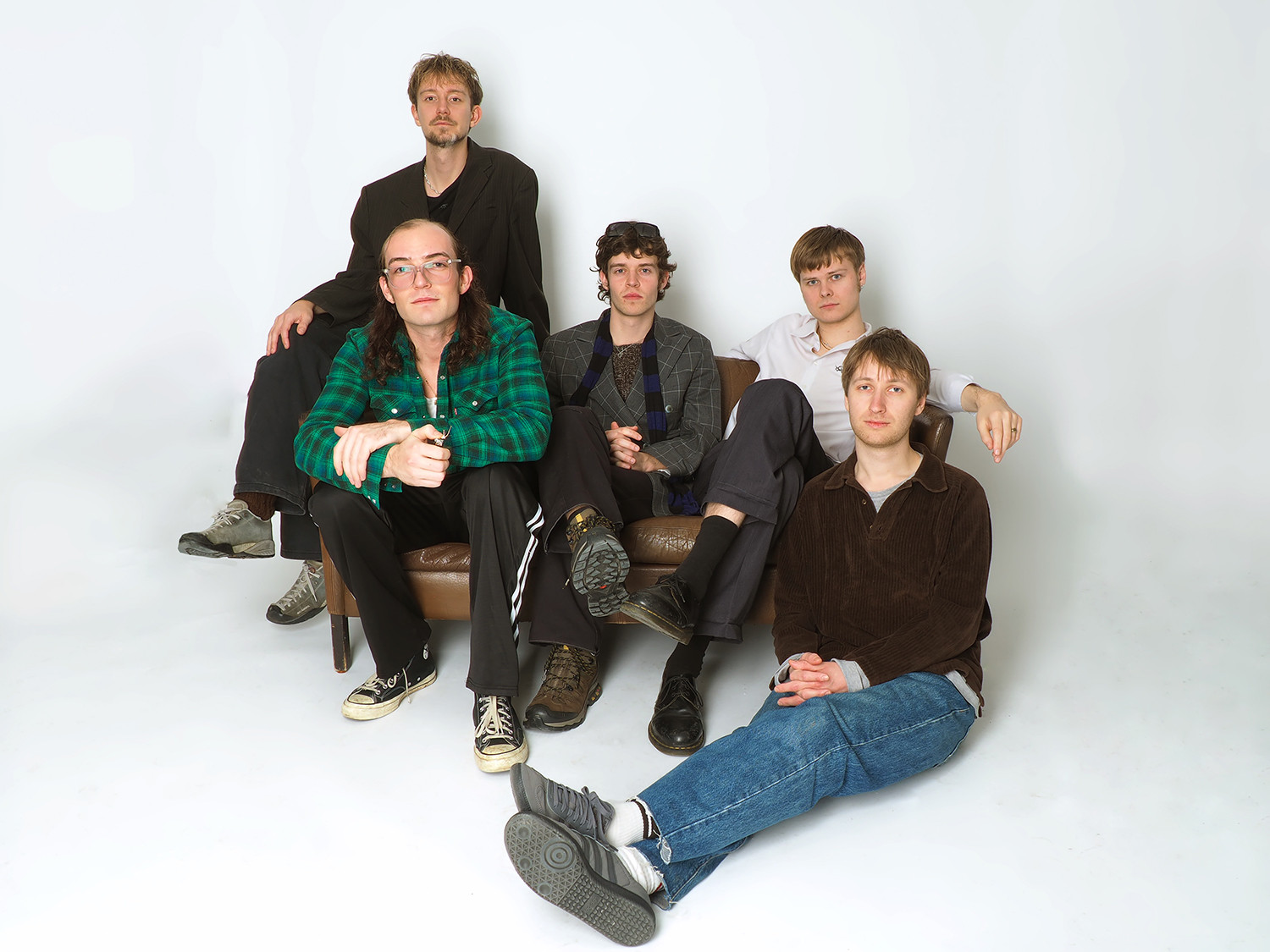
Nausia er en københavnsk kvintet dannet i 2019, bestående af to saxofonister, guitar, bas og trommer. Bandet kombinerer elementer fra spirituel jazz, krautrock og minimalisme og skaber et unikt lydunivers præget af både tranceagtige passager og eksplosive udbrud. De debuterede med albummet Prince Kiosk i 2020, efterfulgt af Good Intentions i 2021. I marts 2025 udgav de deres tredje album, Finding a Circle, som markerer kulminationen på fem års kreativ udvikling. Nausia er blevet nomineret til DMA Jazz som 'Årets Nye Navn'.