SEISMOGRAF

Solr Search

When the Past Begins to Make Noise Again

7. June 2025 – At Geneva’s Archipel Festival, lost instruments and occult soundscapes are brought to life in a journey through speculative rituals and experimental music.

Af
  • Anna Ullman

One should reject modernity and embrace tradition is a phrase that originated in far-right internet subcultures. Recently, I saw it used by a bakery chain trying to sell me cream buns for a holiday that doesn’t exist.

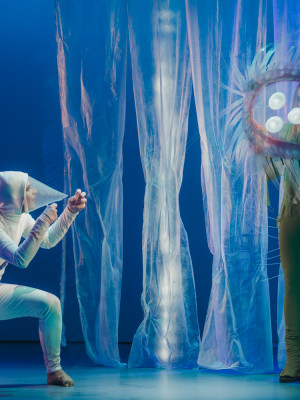
Returning home from the southern Swiss experimental festival Archipel, I had the impression that the program’s take on contemporary music – especially in its engagement with premodern traditions – felt the most forward-thinking.

Archipel, which humbly and humorously bills itself as a festival for la musique bizarre (April 4–13), is extensive in scope: 50 concerts and performances, eight sound installations, and three artist talks, if my program-counting was accurate. Geographically, however, it’s tightly focused: nearly all events take place in Geneva’s Maison communale de Plainpalais, a 1908 Art Nouveau ballroom turned cultural center.
Læs videre
© Høgni Heinesen
kritik

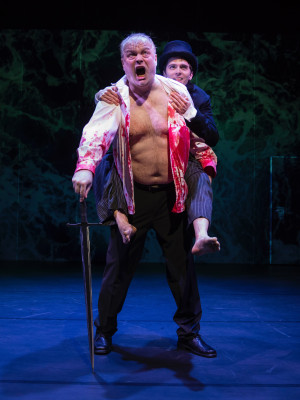
Universal Music with Local Truths 

Local traditions play a central role in the second-ever Faroese opera, in which Sunleif Rasmussen reclaims a local story made famous by Wagner.

Af
  • Andrew Mellor
13. January 2025
»The Rat and the Tree«. © Grzesiek Mart
reportage

A Modern Festival with a Memory

At Warsaw Autumn, they are not only focused on sounds. The Polish festival aims to influence reality with new names and ideas.

Af
  • Andreo Michaelo Mielczarek
6. January 2025

© Shutterstock

Sounding Women's Work II

»You look like 50% of the world's population, but are professionalised as a minority« – peer reviewed academic articles and audio papers on gender, technology and infrastructure in Nordic sound art and experimental music.

Peer

© Login/Shutterstock.com

Sounds of Science

6 April 2021 – Our new peer-reviewed special edition on composition, recording and listening as laboratory practice. Ten audio papers, two in-depth articles and an introduction by editors Henrik Frisk and Sanne Krogh Groth.

‘Every time we listen to music or make music, we are at the same time creating social relations or socialities’

Gender and social relations in New Music: Tackling the octopus
A conversation with Georgina Born

Collection

Marcela Lucatelli. © Marcela Lucatelli

Meet the composers

Some of them are just getting started. Others are well-established names on the international scene. But what are their thoughts on the music they create and the world they live in? Read a selection of our most interesting pieces on composers and composing.

Guide

© SABRINA SANTIAGO

My name is Laura Cocks – would you like to see my playlist?

»Music is to me the subcutaneous holy matter. Finding each other in ourselves and ourselves in each other.«

© PR

Female Composers in 20th-century Electronic Music

© PR

On the Typical, the Indistinct and the Impersonal in the Sonic Arts, Media and Auditory Culture

About

Seismograf

Welcome to Seismograf

Seismograf is an independent Danish web magazine focusing on the newest developments within the arts of sound. On this page you will find our most recent English-language content as well as collections on selected topics. Want to know more about Seismograf? Then go on and scroll down to the bottom of this page.

Collection

© Anna Cokorilo

Around the world with Seismograf

Seismograf may be located in Denmark, but brilliant music is performed all over the world. Which means we often cover events in places far, far away, as illustrated by this selection of articles.

Essays

2024: An Earful of Chaos 

essay
| Jennifer Gersten| 29. December 2024

Gender, Canon, and Eastern European Women Pioneers of 20th-century Electronic Music

essay
| Marta Beszterda van Vliet| 24. November 2024

Another day, another rediscovery of Else Marie Pade

essay
| Sune Anderberg| 20. August 2024

Death and Masochism

essay
| Macon Holt| 4. November 2022

Actual Friends, Making New Maps from the Future

essay
| Macon Holt| 4. November 2022

Alien Frequencies

essay
| Ben Carver | 27. October 2022

»My pregnant body changed things – composing with the process«

essay
| Laura Toxværd | 25. May 2022

On stage we are four bodies

essay
| Meshes| 10. February 2022

»Had I run around with the others, would I have become a composer at all?«

essay
| Mette Nielsen| 10. February 2022

Reviews

When the Past Begins to Make Noise Again

kritik
| Anna Ullman| 7. June 2025

Universal Music with Local Truths 

kritik
| Andrew Mellor| 13. January 2025

Head to Venice and Hear Foreign Songs Everywhere

kritik
| Andreo Michaelo Mielczarek| 18. October 2024

»Ist nix für Frauen« 

kritik
| Giada Dalla Bontà| 6. August 2024

How we learned to love repetition

kritik
| Sune Anderberg| 13. February 2024

This book asks you to breathe and resonate without words

kritik
| Morten Søndergaard| 24. September 2023

Real Estate VS Culture 

kritik
| Sébastien Doubinsky| 7. August 2023

Do you like the sound of apples?

kritik
| Andrew Mellor| 21. April 2023

In Northern Norway, they have a festival that cracks the iron curtain

kritik
| Jakob Gustav Winckler| 9. March 2023

Interviews

The Useless Hell

interview
| Henrik Marstal| 16. January 2024

Side entrance to the New Music Scene

interview
| Jan Topolski| 29. November 2023

UKRAiNATV – the future starts here

interview
| Giada Dalla Bontà| 5. October 2023

»We love to talk about solidarity«

interview
| Giada Dalla Bontà| 2. October 2023

»I love freedom and I know why«

interview
| Marta Konieczna | 1. December 2022

»I can’t kill anybody with my profession« 

interview
| Mathias Monrad Møller| 3. November 2022

»I would very much like to survive, thanks in advance«

interview
| Sune Anderberg| 27. August 2022

Oil, Opera and the history that haunts us

interview
| Macon Holt| 23. August 2022

Three Artists. One Hope

interview
| Julie Hugsted| 9. March 2022
Logoer af støttegivere

Seismograf is supported by

The Danish Arts Foundation, The Danish Composers’ Society/Koda Culture and The Independent Research Fund Denmark.